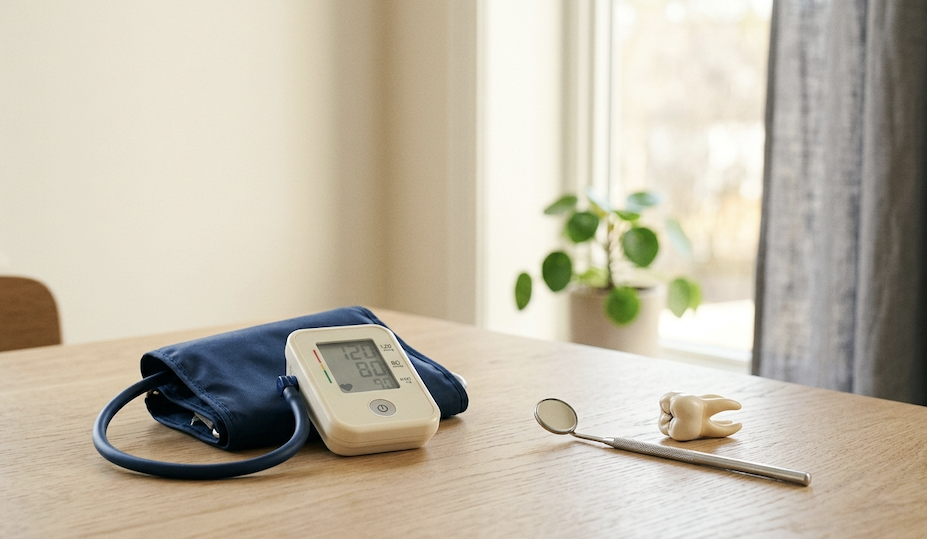

Melissa, a nurse, took only one medication: something for her high blood pressure. Nothing in her mouth hurt, so no one thought to do a dental examination. At a new patient dental exam, her lower left second molar turned out to hold a severe, pain-free infection, with so much bone lost that the dentist couldn’t save the tooth. Three weeks after it was carefully removed, Melissa said, “Guess what? I don’t need my blood pressure medication any longer!” Her physician had managed the blood pressure for years, but the tooth was the cause all along. The real answer was right under her nose. Literally.
Pain-free dental infections have medical consequences, and Melissa’s story shows the connection between oral health and heart disease more clearly than most people expect.
So can tooth pain cause high blood pressure? Sometimes for as long as the pain lasts, and sometimes even after the pain stops. The more important question is whether a pain-free infection like hers is quietly doing the same damage without any warning at all.
Why a Painful Tooth Sends Your Blood Pressure Up
Melissa’s case captures one half of the picture: an infection that never hurt yet still affected her blood pressure. The other half is what happens when a tooth does hurt, and the answer starts with your body’s stress response.
A toothache puts your body under stress. Research on 181 people found a relationship between dental pain sensitivity and 24-hour blood pressure readings, according to a study published in the Journal of Hypertension.
Acute pain releases cortisol and adrenaline, hormones that constrict your blood vessels and increase your heart rate, causing your blood pressure to rise while the tooth is hurting. If you catch a high reading during a toothache, recheck it once the pain settles. The number will often come back down on its own.
An infected tooth can raise your blood pressure in a second way, even without pain. Oral bacteria travel through your bloodstream to reach your heart, brain, and kidneys.
This oral-systemic connection explains why symptoms of a tooth infection spreading to your heart are worth learning to recognize. Your immune system responds to that bacteria with inflammation, and sustained inflammation can keep your blood pressure elevated long after any pain has faded.
How Serious a Blood Pressure Spike from Tooth Pain Can Be
Gum disease is the most common source of that inflammation, and it deserves its own explanation. But first, it helps to know how serious a pain-driven spike can get.
How much a toothache raises your blood pressure depends on the intensity of the pain and how your body responds to it. A mild ache might barely move your reading, while severe, throbbing pain can push it up noticeably for as long as the pain lasts. In most cases, this kind of pain-driven spike eases once the pain is under control.
A painful tooth deserves prompt attention rather than a wait-and-see approach when it comes with a fever or facial swelling, which Mayo Clinic identifies as signs an infection may have spread beyond the tooth.
A blood pressure reading that stays high after the pain settles is worth mentioning to your physician. Pain that keeps returning deserves attention too, since a tooth that hurts on and off can point to an ongoing issue. Pain does not always tell the whole story, and it can be the first sign of something bigger.
Pain Is an Unreliable Narrator
A painful tooth is easy to notice, but the far more common case is the one that gives no warning at all.
About 90% of dental infections cause no pain at all. High blood pressure, diabetes, glaucoma, and early-stage cancer often work the same way, since none of them announce themselves through pain either.
A lack of pain does not mean you are healthy. A pain-free, infected tooth can look and feel completely normal while it quietly affects your blood pressure.
Melissa is a perfect example of pain-free dental infections causing high blood pressure. The only medication she took was for high blood pressure, and nothing in her mouth hurt. No one thought to look there. She hadn’t seen a dentist for many years since she had no pain and believed her mouth to be healthy. Finally, she scheduled a dental examination. At her new patient dental exam, her lower left second molar turned out to have a severe, pain-free infection with so much bone loss that the tooth could not be saved.
Melissa’s tooth is the reason pain is such an unreliable narrator. It can raise an alarm when a tooth is inflamed, and it can stay completely silent while an infection quietly raises your blood pressure for months or even years. The same inflammation that makes oral health a cardiovascular issue drives that increase.
Gum Disease, Inflammation, and Your Blood Pressure
This is the same inflammation at work in one of the most common oral health conditions, and its effect on blood pressure is well documented.
Gum disease, also called periodontal disease, affects about 40% of American adults over 30, and about 60% of adults over 65, according to the Centers for Disease Control and Prevention (CDC). If your gums bleed when you clean between your teeth, that is a sign of the same inflammation at work.
Inflamed gum tissue releases markers such as C-reactive protein into your bloodstream, and your cardiovascular system responds to those signals.
Caring for gum disease can make a measurable difference. A major analysis of more than 80 studies found that people with severe gum disease are 49% more likely to have high blood pressure.
In a clinical trial published in the European Heart Journal, patients who addressed their gum disease saw their blood pressure drop by 11 to 12 points. That is the same drop as adding another blood pressure medication, and it came from caring for their gums rather than a new prescription.
Both teeth and arteries build up plaque, and both deserve the same attention. Our explainer on how a tooth infection can cause high blood pressure walks through that mechanism step by step.
What to Do About a Painful Tooth, or a Pain-Free One
Fortunately, protecting your mouth and your blood pressure both start with the same simple habits.
Follow these three steps whether your tooth aches or feels perfectly fine:
- Take pain as a signal to get checked, rather than a diagnosis on its own. If a tooth hurts, schedule a complete dental exam with full-mouth X-rays to see what is happening beneath the surface.
- Share your health history both ways. Tell your dentist about your blood pressure and current medications, and your physician about your dental health. The two rarely compare notes.
- Spend eight to 10 minutes a day thoroughly cleaning your teeth. Give two minutes to your top teeth and two minutes to your bottom teeth with a soft toothbrush. Then spend four minutes cleaning between your teeth with interproximal brushes, directed water irrigation, or flossing. Use disclosing tablets now and then to see exactly what you are missing.
You can’t complain about the expense of dentistry if you’re not even doing the free stuff.
Frequently Asked Questions About Tooth Pain and Blood Pressure
These same habits answer most of the specific questions people ask about tooth pain and blood pressure.
Can Tooth Pain Cause High Blood Pressure?
Yes, tooth pain can raise your blood pressure reading, usually only for as long as the pain lasts. If you measure your blood pressure while a tooth hurts, read that number as a snapshot rather than a diagnosis. Recheck it once you feel better.
Is a High Blood Pressure Reading During a Toothache Dangerous?
Most of the time, danger depends on what is causing the reading. One clear exception overrides that: a reading of 180/120 or higher, combined with symptoms such as chest pain, shortness of breath, back pain, numbness, weakness, vision changes, or trouble speaking, is always an emergency, according to the American Heart Association. Without those signs, a painful-tooth reading calls for a visit to your dentist rather than a reason for alarm.
Does the Pain from a Toothache Go Away Even if the Problem Is Still There?
Yes, the pain often goes away even if the problem remains. What causes most dental pain is pressure. Once you relieve that pressure, the pain can fade even though the underlying infection is still present. That’s why disappearing pain isn’t proof that a tooth is healed, and why an exam matters more than how the tooth feels.
If My Tooth Stopped Hurting, Do I Still Need to See a Dentist?
Yes, you do, especially when the tooth has gone quiet because the nerve inside it died. A dead nerve stops sending pain signals. The tooth can feel completely normal while bacteria keep multiplying below the gumline and, in some cases, form an abscess over months or years. The longer that silent activity continues, the more bone it can destroy, and the more bacteria it can send into your bloodstream. This is why a comfortable tooth still earns a place on your dentist’s radar.
Can a Pain-Free Tooth Still Affect My Blood Pressure?
Yes, and this is the situation most people overlook. A tooth that feels completely fine can still carry an infection that raises your blood pressure over time, the same way Melissa’s did.
Can Gum Disease Affect My Blood Pressure?
Yes, gum disease can affect your blood pressure. It affects about 40% of American adults over 30, and research ties it to a higher risk of high blood pressure. The mechanism matches a tooth infection. Inflamed gum tissue releases inflammatory markers into your bloodstream, and your body responds in ways that can raise your blood pressure over time. A dental exam that checks for gum disease is worth including alongside any blood pressure workup.
Why Does My Blood Pressure Medication Give Me Dry Mouth?
Many blood pressure medications cause a dry mouth, called xerostomia, as a side effect. Your saliva normally dilutes the acid that harmful bacteria produce, so a dry mouth can let cavities and gum disease progress. To ease the discomfort, sip water throughout the day rather than gulping large amounts at once, and mention the dryness to your dentist.
Should I See My Dentist or Physician for Tooth Pain with High Blood Pressure?
Start with your dentist in most cases, since the dentist is the one who can address the tooth itself. If your only blood pressure concern is a reading that rose during the pain, caring for the tooth usually brings that reading down, too. One appointment handles both. Call your physician first only when the reading stays high after the pain eases, or when you already manage hypertension and want your medication reviewed alongside the dental issue. Either provider can loop in the other if something falls outside their focus, giving you coordinated care.
Will Caring for the Painful Tooth Bring My Blood Pressure Back Down?
If the pain is driving a short-term spike, addressing the pain usually lets your blood pressure settle. If a severe infection is adding to the load on your body, carefully removing or addressing the source can lower it as well. Work with both your dentist and your physician as outcomes vary from person to person.
How Do I Know If My Tooth Is Infected If It Doesn’t Hurt?
Imaging does the detection for you. A full-mouth set of radiographs (X-rays) can show a dark area at the root tip where bone has been lost to infection, the widening of space around a root, or an abscess that hasn’t yet caused symptoms. Dentists can’t confirm any of these events through a simple visual check. Dental X-rays every one to two years pick these changes up early. Your dentist may take them more often if you have a history of infection or gum disease.
Your Mouth Holds the Answer to Your Blood Pressure
So can tooth pain cause high blood pressure? Yes, but the more important lesson is that pain tells you something is happening, though the real cause can stay hidden. A toothache announces itself right away, while an infection can work quietly for months, exactly as it did with Melissa.
The goal is always to find and address the source of a health problem, not just manage the symptom.
If you know someone chasing a blood pressure reading who has not had a complete dental exam, share this article with them. The connection between their mouth and their blood pressure could change their life.
If dental care has improved or resolved a health issue for you or someone you know, please share your story at Stories@TheDentalMedicalConvergence.org. Your experience could help someone else recognize the same pattern in their own health.
For a deeper look at this connection, read Dr. Chuck’s book, “Are Your Teeth Making You Sick?”.
Medical Disclaimer: This content is for informational and educational purposes only and does not constitute medical or dental advice, diagnosis, or treatment. Home remedies are not substitutes for professional dental care. Always consult your dentist and physician before making changes to your health routine. If you experience severe pain, swelling, fever, or signs of infection, seek immediate professional care.