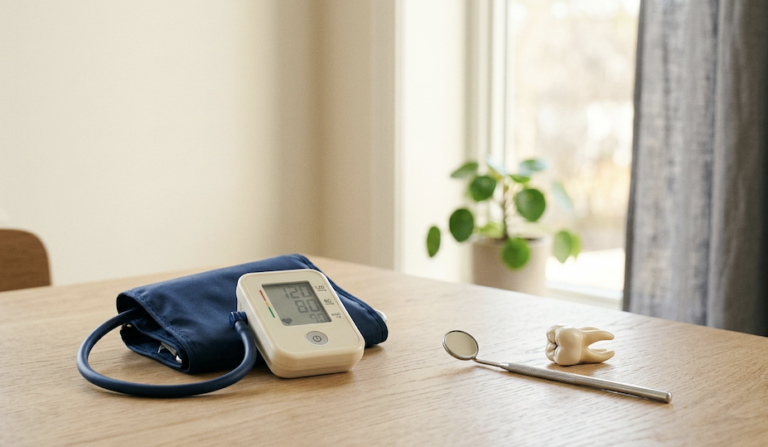

Medical Disclaimer: This content is for informational and educational purposes only and does not constitute medical or dental advice, diagnosis, or treatment. Home remedies are not substitutes for professional dental care. Always consult your dentist and physician before using any home remedies. If you experience severe pain, swelling, fever, or signs of infection, seek immediate professional care.
Nurse Melissa was due for her own medical exam. At her doctor’s visit she discovered she had high blood pressure, which was news to her, because she felt fine. Her doctor put her on blood pressure medication, and her blood pressure came down to normal, so she assumed the issue was fixed, the same blind spot that shows up when patients ask whether their wisdom teeth are connected to heart health only after a routine exam turns up a problem.
Following through on her overall health, she scheduled a complete dental examination.Her X-rays revealed a huge infection on her lower left second molar with no pain at all. The best treatment, in this case, was antibiotics and extraction. Three weeks after the tooth and infection were removed Melissa told us she no longer needed her blood pressure medication.
The bacteria from Melissa’s dental infection was invading her bloodstream. She was totally unaware. Her immune system recognized the bacterial invasion and launched an attack, which included increasing her blood pressure. When the bacterial invasion ended, her immune system no longer had to fight as hard and her blood vessels relaxed and returned to normal.
The link between what’s happening in your mouth and what’s happening in the rest of your body becomes clear in everyday life, whether you’re trying to get rid of a pestering headache or address serious health concerns such as heart disease. This connection, called the oral-systemic connection, is something most people have never heard of. In this article, we explore why your oral health might be responsible for high blood pressure.
What Does a Tooth Infection Do to Your Body?
Bacteria don’t linger in one spot. Even if you have a dental infection, your bloodstream connects your entire body. Once the bacteria enter your bloodstream, they affect your entire body. Bacteria can go anywhere in your body, including traveling to your heart, brain, pancreas, liver, kidneys, and lungs.
Your body recognizes that something is wrong and works to fight your dental infection. One way your body fights is through inflammation, which is a normal, healthy response from your immune system. The challenge begins when the infection goes untreated for weeks, months, or even years. When you don’t address an infection, it can take a toll on your cardiovascular system. Recognizing the symptoms of a tooth infection spreading to your heart helps you catch that toll before it turns serious.
Infection affects your blood vessels. Your heart has to work harder, and your blood pressure climbs. Studies show that people with untreated oral infections are 2.7 times more likely to have cardiovascular problems. That same inflammatory burden can also interfere with your heart’s electrical signals, which is one reason a tooth infection can cause heart palpitations.
An infection anywhere in your body can raise your blood pressure, and a dental infection is no different. A tooth that once had a root canal and later reinfected is a common example, so it is worth understanding whether an infected root canal can cause high blood pressure. The catch is the same in every case: most people never know the infection is there, and the research backs this claim up.
A 2025 analysis of nearly 14,000 adults published in Scientific Reports found a significant association between poor dental health and hypertension, adding to a growing body of evidence that your mouth and your blood pressure are more connected than most people realize. Your mouth could very well be raising your blood pressure right now, and you would have no idea, because you feel no pain.
The Tooth Infection Symptom Most People Never Notice
Ninety percent of dental infections have no pain. That may come as a surprise to you, but when you think about it, because neither does high blood pressure, diabetes, glaucoma, or the early stages of cancer. A lack of pain might not indicate that you’re infection-free and healthy, which is why it’s important to schedule regular health and dental checkups. When a tooth does hurt, a different mechanism is at work, one covered in a companion article on can tooth pain cause high blood pressure.
It’s important to be an advocate for your own health. As much as we rely on physicians to act as guardians of our health, the simple truth is that they were never trained to look in the mouth as a potential source of medical problems. Instead, medical school trained them to treat the symptom, especially concerning oral health.
Research shows oral health is not traditionally included in many medical school, physician assistant, or nurse practitioner curricula. The same research reveals that researchers at Harvard and UMass found the gap existed across the board, and not only at smaller or underfunded schools. Your physician is exceptional at managing your blood pressure, cholesterol, or heart health. But your mouth and oral infections never formed part of the curriculum.
This is how this would affect you in practice. You go in for your annual physical, and your physician checks your vitals. Nobody asks about your last dental visit or whether your gums bleed. It is not your physician’s fault, but oral-systemic connection is one they are unlikely to raise, which is why scheduling a dental checkup is a step you will need to take yourself.
The inability to tie conditions to oral infections at a physician level is the crack in the system that Melissa fell through, but with more education and awareness, patients just like you can start connecting the dots and identify how your oral infection might be a cause of your high blood pressure. Ask your dentist about possible pain-free infections, and share your results with your physician to create better awareness.
The Unexpected Connection Between Blood Pressure Medication and Gum Disease
Here is something that you might not always consider about your blood pressure medication. It could worsen the infection that started you on the blood pressure journey in the first place. Before you know it, your physician recommends increasing your dosage or changing medication because your blood pressure management seems harder to control.
Many common blood pressure medications cause xerostomia, which means your mouth produces less saliva than it should. That matters more than most people realize. Saliva is not just there for comfort. Saliva actively dilutes the acids that harmful bacteria produce in your mouth. When saliva production drops, those acids go unchecked, allowing cavity rates to climb and gum disease worsens.
The bacteria responsible for that gum disease find their way into your bloodstream, and your body responds through inflammation. When you have inflammation, your blood pressure could increase. So your physician increases your dose, or adds another medication, and the cycle continues. Your physician treats your symptoms without finding or addressing the source.
What Studies Show About Tooth Infections and High Blood Pressure
The research on the link between tooth infections and blood pressure has been building for years, and now confirms what clinicians have observed in practice for years. Your gum health and your blood pressure are not two separate concerns. Gum disease is a significant and often overlooked factor in high blood pressure, though it is rarely the only one.
A major analysis covering more than 80 studies found that the risk of developing high blood pressure increases by 22 to 49%, depending on the severity of gum disease. The analysis reveals that the worse your infection is, the higher your risk becomes. The analysis identifies the mouth as a meaningful factor in cardiovascular health. That is not a small association. That is a dose-response relationship, and it points directly to the mouth as a meaningful factor in cardiovascular health.
There is also the treatment side of the research to consider. A meta-analysis of 21 randomized controlled clinical trials found that addressing gum disease resulted in a drop in systolic blood pressure. By focusing the source, these clinicians were able to move the numbers instead of treating the symptoms. You don’t always need a new prescription. Sometimes you need a thorough dental examination.
What You Can Do Starting Tonight
If a recent visit to your physician indicated high blood pressure, work with your healthcare provider to get the numbers down safely. Once you’ve done that, it’s time to look for a possible source of infection. These three steps should get you started:
- Get a thorough dental examination: You need more than just a cleaning to identify possible infections, as some of these form under the gum line. Ask your dentist to look for pain-free infection, take radiographs (X-rays), and check your gum health.
- Start an 8-to-10-minute daily home care routine: A thorough cleaning provides you with the foundation for a healthy mouth. At least four minutes cleaning the teeth and four minutes cleaning between your teeth with interproximal brushes, flossing, or directed water irrigation.
- Tell your physician what you’ve learned: Bring up your dental health at your next appointment. The physician-dental gap is real, and you can bridge it yourself.
These three steps cost very little and could change everything. The dental examination alone may reveal a pain-free infection that no physician tasked to manage your blood pressure has ever thought to look for.
Close the Gap Between Your Dental Health and Your Blood Pressure
The mouth is the most overlooked variable in cardiovascular care, and closing that gap could matter more to your blood pressure than your next prescription adjustment. Melissa was a nurse who did everything right, and it still took one pain-free, infected tooth to explain her high blood pressure. If her story sounds familiar, the answer may be closer than you think.
Schedule a comprehensive oral health evaluation with a dentist who understands the oral-systemic connection. If you have been through something similar, we want to hear from you. Please help someone by sharing your story at: Stories@TheDentalMedicalConvergence.org or on social media. Every account like Melissa’s is one more person who understands that the real answer may literally be right under their nose.
If you want to learn more about the mouth-body connection, you can also read “Are Your Teeth Making You Sick” for groundbreaking information about how pain-free dental infections travel through your bloodstream, causing or exacerbating many diseases.