Of Acute Heart Attacks Triggered by Oral Infection
42%
Of Adults Over 30 Have Periodontal Disease
11 pts
Blood Pressure Drop After Addressing Gum Disease
A Nonprofit Organization
Closing the gap between dental and medical practice through education, research, and clinical integration. We believe the mouth is the front door to the body, and both professions must work together to prevent systemic disease.
Most dangerous dental infections don’t hurt. A tooth can harbor severe bacterial infection for months, even years, while a patient feels nothing at all. The infection spreads silently, crossing into the bloodstream.
"By the time pain appears, systemic damage may already be irreversible."
Yet, current medical and dental practice keeps these two professions separate. Your cardiologist doesn’t ask about your teeth. Your dentist doesn’t coordinate with your primary care physician, and the infection spreads undetected in this gap.
$400 billion
Cardiovascular disease costs the U.S. over $400 billion a year. Research suggests oral infections may be a significant contributing factor.
Source: American Heart Association & World Health Organization
Melissa's Hidden Spiral
Melissa was a nurse. The only medication she was taking was for high blood pressure. Her physician took her blood pressure, it was high, so he gave her a pill. Her blood pressure normalized, so everything seemed fine.
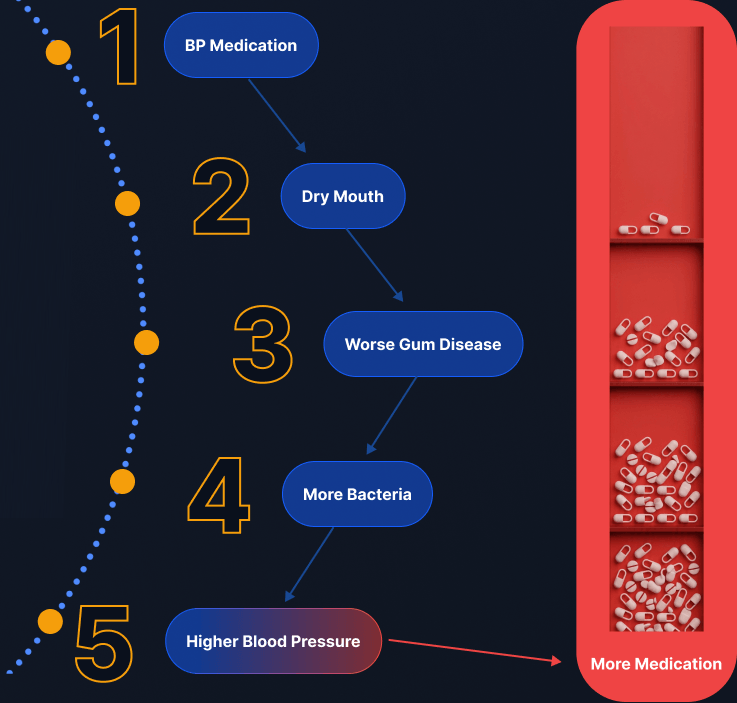
The Vicious Cycle
BP Medication -> Dry Mouth -> Worse Cavities and Gum Disease -> More Bacteria -> Higher Blood Pressure -> More Medication
Melissa’s physician never asked about her teeth. For years she continued her blood pressure medication never knowing why she needed it. Both Melissa and her physician were completely unaware of her chronically infected molar, which was discovered during an eventual dental examination and was the cause of her elevated blood pressure.
She didn't have a blood pressure problem. She had a dental problem that looked like a blood pressure problem.
The Vet Question
In Veterinary Medicine
When a dog receives dental prophylaxis before any surgical procedure, the vet evaluates the entire mouth for infection. They understand that oral bacteria can seed heart valves, lungs, and kidneys. They prevent the problem.
They never separate dental health from systemic health. It would be considered malpractice.
VS
In Human Medicine
Your cardiologist doesn’t ask about your teeth. Your primary care physician hasn’t examined your mouth in years, if ever. Before heart surgery, few protocols include dental clearance. The mouth and body are regarded as separate kingdoms.
Why does a veterinarian connect the dots between the mouth and health, and your physician does not?
The Separation That Never Should Have Lasted
1840
The Historic Rebuff
Physicians at the University of Maryland College of Medicine rejected a proposal to include dental instruction in the medical curriculum. The Baltimore College of Dental Surgery opened that same year as the world’s first standalone dental school, and the mouth was no longer connected to the rest of the body in how we train and deliver care.
The Split
An internist named Dr. Wilber E. Post addressed the American Dental Association and published his findings in JADA, presenting clinical evidence that oral infections were causing arthritis, neuritis, and other systemic diseases. He reminded both professions that physicians had been documenting this connection since 1801. The professions did not listen.
1934
2000s
Evidence Emerges
Research begins confirming links between oral infections and cardiovascular disease, diabetes complications, and stroke risk. Medical journals report the connection. Dental journals confirm it, but the professions continue to work separately.
Still Separate
A patient presents to a major hospital for heart valve replacement. A dental infection is discovered. The surgical team will not operate until dental clearance is obtained. The patient is sent to a dental clinic across town. Coordination between the teams is minimal. No one owns the connection.
2026
TDMC Impact
Measurable change across education, expertise, and clinical practice
40
Years of Experience
30K+
Patients Treated
91K+
Healthcare Professionals and Patients Reached
1,000s
of Medical Issues Improved or Resolved
Conditions Amplified by Untreated Dental Disease
When oral infections go unaddressed, systemic risks multiply across critical conditions.
49%
Heart Disease
People with severe gum disease are 49% more likely to have high blood pressure.
Active gum inflammation is associated with a 32% greater likelihood of high or uncontrolled blood pressure. Addressing the mouth could be part of the answer.
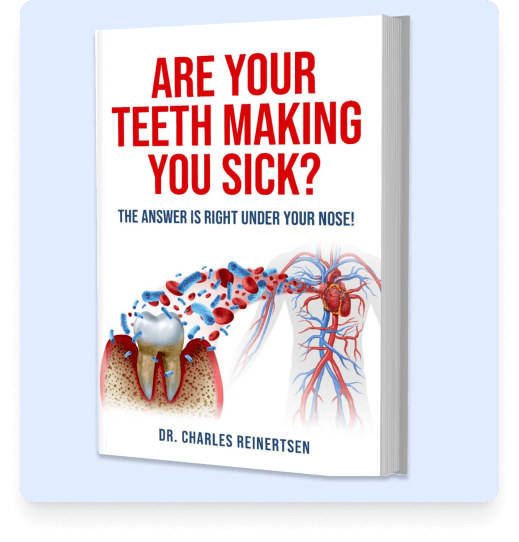
Written for everyday people, not just professionals, this book by Dr. Charles Reinertsen connects the dots between your mouth and the rest of your body. Patient stories, the science behind the oral-systemic connection, and steps you can take at home today.
Thousands of healthcare professionals, dentists, physicians, and patients are closing the gap. They’re asking questions. Comparing notes. Changing how care is delivered. You can be part of this shift. Sharing your story about how dental issues affected your medical health can help many people who are unaware of the dental – medical connection.
"The same blood that goes through the teeth and gums also goes through the heart and brain."
Stories of Change
Real people. Real transformations. Real connections between dental and systemic health.
“Before coming to your office, I was living in a state of constant physical and mental decline. I had multiple cracked, nasty, and heavily infected extractions in the top of my mouth…. Despite my background as a Registered Nurse, I had not fully realized how vital our teeth are as organs connected to our holistic health…. Once those infected extractions were removed, the change was immediate and miraculous. It was as if a light switch had been flipped. The brain fog lifted, my mood improved, and my mental clarity returned. I finally felt “whole” again. This experience has proven to me that the mouth is the gateway to the body’s health, and ignoring it can have devastating effects on one’s mental and physical well-being.”
health restored after infected extractions removed
M
Michelle B., Registered Nurse, BSN
“Before I started having my bad teeth removed, I had low stamina and energy. After they removed my bad teeth, I have experienced a noticeable increase in my physical performance. My energy and stamina have easily doubled and my body feels healthier and more agile. I used to have random chest pains, but I haven’t experienced any since the extractions were completed.”
renewed vitality after teeth removal
J
Jonathan L.
“My dad had a heart attack at age 43. They found no blockages, only an infection in his mouth. My brother had elevated liver levels no one could explain, until they found a deeply infected wisdom tooth. I wish my family had known this information earlier.”
infections and critical conditions
D
Deb
“About 10 years I have been neglecting going to the dentist in fear of what the results may be…. Since I got my teeth fixed, and my smile back and my dental health restored, I have become a new person. My mental acuity is off the charts and I strongly encourage anybody reading this to do the same. It will change your life.”
mental acuity restored
D
David L.
Three Steps to Close the Gap in Your Own Care
1
Have the Conversation
Ask your physician, “Does the health of my mouth affect my medical health?” Then listen to their answer and have a conversation. Many physicians have never made the connection to your oral health.
Ask your dentist the same question, “Does my dental health affect my medical health?” Then listen to their answer and have a conversation. Just as physicians, many dentists have not made the dental – medical connection either.
Many dentists are unaware of your cardiovascular, metabolic, and inflammatory status. Insist that your physicians and dentists communicate. Many won’t have. Be the catalyst.
2
Get Evaluated
Find a dentist who understands systemic implications of oral disease. Find a physician who understands the oral-systemic connection. Request a comprehensive evaluation that connects both domains.
3
Share What You Know
Tell your family. Tell your friends. Tell a healthcare provider who hasn’t heard this yet. The mouth is the front door. Close the gap one conversation at a time.
The Science Behind the Connection
Peer-reviewed research establishing the dental-medical link
PEER REVIEWED
Periodontal Disease and Cardiovascular Outcomes
A review of 30 long-term studies found that people with gum disease have a 20% higher risk of developing cardiovascular disease, and the risk goes up with the severity of the gum disease.
PEER REVIEWED
Oral Infections and Stroke Incidence
A major analysis of nine studies found that people with gum disease had nearly three times the risk of stroke. For adults under 65, the connection was even stronger.
PEER REVIEWED
Periodontal Disease and Hypertension
A review of 81 studies found that people with severe gum disease were 49% more likely to have high blood pressure. Addressing the mouth helped bring those numbers down.
PEER REVIEWED
Gum Disease Treatments and Lower Blood Pressure
A clinical trial found that addressing gum disease reduced blood pressure by 11 to 12 points. That’s the same drop as adding another medication, but without a new prescription.
PEER REVIEWED
Oral Bacteria Found in Heart Artery Plaques
Researchers examined artery plaques from over 200 patients and found oral bacteria living inside the walls of diseased arteries. Nearly 90% of the most advanced and ruptured plaques tested positive for bacteria that originated in the mouth.
PEER REVIEWED
Diabetes and Gum Disease: They Make Each Other Worse
People with diabetes are about three times more likely to develop gum disease, and severe gum disease makes blood sugar harder to control. Addressing gum disease has been shown to improve blood sugar levels.
TEDx
TEDx Talk: Closing the Gap
A 16-minute exploration of how the 1840 separation between dental and medical practice created a systemic blind spot. Featuring case studies of preventable outcomes and the emerging science bridging the fields.
"You don't need a Hollywood smile to have a healthy mouth. But you need a healthy mouth to have a healthy heart." — Dr. Charles Reinertsen