
By Dr. Chuck Reinertsen, Founder of The Dental Medical Convergence
You never expected a dull ache in your lower jaw to point to something far more serious than a toothache. Yet that dull ache could be the reason you end up in your local emergency room, facing a cardiovascular event rather than a dental one.
This article explains which teeth could hurt during a heart attack, and how to tell heart pain from an ordinary toothache. You’ll be better equipped to know when to call 911 and understand the quieter dental connection most people never hear about: the connection between oral health and heart disease.
Which Teeth Hurt During a Heart Attack?
Heart-related pain shows up most often in the lower jaw and the lower teeth. You’ll feel it across several teeth or the whole jaw at once rather than in one pinpoint spot. What makes this jaw pain different from a normal toothache is that cardiac jaw pain can appear on the top and bottom, while a true dental problem usually stays in one area, in one tooth.
Pain from a heart attack may radiate to the jaw and teeth. When you feel jaw or tooth pain that doesn’t seem to have a clear point of origin, it’s worth paying attention to. The teeth themselves might be perfectly healthy, but you’re feeling the signal in the wrong place.
Why a Heart Attack Sends Pain to Your Teeth
It might not make sense for a heart condition to cause pain elsewhere in your body, but this is called referred pain. It’s the reason heart-related tooth pain exists at all. The heart and jaw share overlapping nerve routes to the brain, so when your heart muscle is short of oxygen, your brain can read the signal as a toothache.
A 2023 review in Frontiers in Neurology likens it to crossed telephone lines, where pain signals from different areas meet on the same nerve cells. You feel the pain in your mouth, but the message started in your chest.
Referred pain is also why the ache can behave so strangely. It may come and go, shift around the jaw, or fade when you rest and return with exertion. This is a pattern typically associated with exertional angina, though not all cardiac jaw pain follows this course. A tooth that is truly damaged does not act that way.
Recognizing that you’re dealing with referred pain, rather than pain from the tooth itself, is the first step toward taking your discomfort seriously. In serious cases, reaching for a painkiller and waiting might delay urgent, life-saving treatment.
How to Tell Heart-Related Tooth Pain from a Real Toothache
A real toothache usually has a dental trigger you can point to, while referred tooth pain follows the body instead of the tooth. The table below lays out the contrast.
Dental Toothache |
Heart-Related Pain |
| Sharp or throbbing | Dull, heavy, or pressure-like |
| Triggered by hot or cold | Not changed by temperature |
| Worse when you bite or chew | Not changed by chewing |
| Focused on one tooth, one side | Spreads to upper and lower jaw, neck, shoulder, or arm, and predominantly left-sided |
| Often a visible dental cause | No visible dental cause |
| Steady, tied to the tooth | May worsen with exertion and ease with rest |
The pattern of your pain is the real tell when you’re working out which teeth hurt during a heart attack versus an ordinary toothache. A tooth problem stays put and reacts to what you do to it, while heart pain spreads outward and doesn’t respond to anything in your mouth. A different pattern, high blood pressure jaw clenching, shows up instead as morning soreness tied to nighttime grinding, so recognizing which pattern you’re looking at matters before you decide whether to call your dentist or call 911.
One more clue is timing: dental pain can increase during any physical exertion due to slightly increasing the blood pressure, which puts more pressure on the dental nerve. Dental pain can also increase when lying down, since the slight increase in blood pressure in your head triggers the pain.
Other Heart Attack Warning Signs to Watch For
Pain in your jaw or tooth seldom happens in isolation. Beyond knowing which teeth hurt during a heart attack, watch for other signals. The American Heart Association lists the signs that often appear together:
- Chest pressure
- Shortness of breath
- A cold sweat
- Nausea
- Lightheadedness
- Pain that spreads to the arm, shoulder, neck, or back
Not everyone gets that crushing chest pain so often depicted in the media. Anything short of debilitating pain might get brushed off, and you must know the subtle signs.
If you have tooth or jaw pain along with any of these signs, respond to it as a medical emergency and call 911 right away. It is far better to be checked and reassured all is fine than to dismiss serious pain you assumed was dental.
Pain-Free Dental Infections and Your Heart
Knowing which teeth hurt during a heart attack is only half the picture. The other half is quieter: something that you might not know is that 90% of dental infections cause no pain at all. But neither does high blood pressure, diabetes, glaucoma, or early cancer.
Lack of pain does not mean you are healthy. Your teeth can look and feel fine, but an infection can still be present beneath your gum line. Alice’s story shows the stakes, in how a toothache exposed hidden illness.
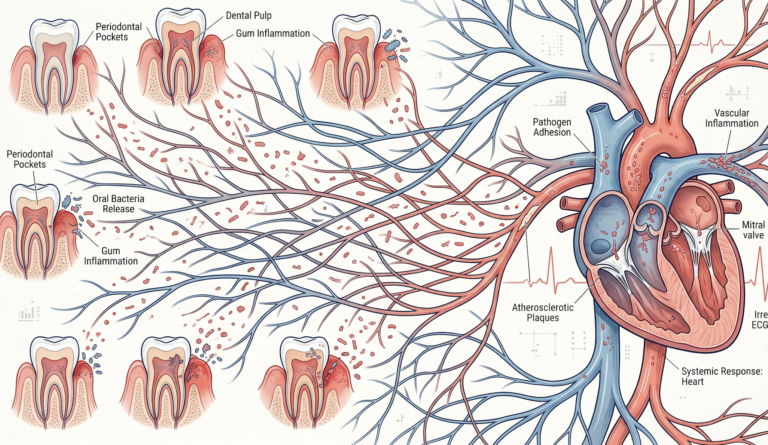
Untreated tooth infections matter because just as heart trouble can send pain to your teeth, dental infections can create heart problems. People with untreated tooth infections are about 2.7 times more likely to have cardiovascular problems such as coronary artery disease than people with healthy mouths.
The American Heart Association’s scientific statement explains that gum disease lets bacteria enter the bloodstream, setting off inflammation that may damage blood vessels and raise the risk of heart disease. Once in the bloodstream, those bacteria travel everywhere your blood goes, including your heart.
What You Can Do Right Now
Your daily home care is free and makes a bigger difference than most people realize. Here are simple steps you can include in your routine for a healthier mouth and overall well-being:
- Spend eight to 10 minutes once a day thoroughly cleaning your teeth: Two minutes per arch, with a soft toothbrush.
- Clean between and behind your teeth for about four minutes: Use interproximal brushes, directed water irrigation, or floss.
- Test yourself with disclosing tablets: They stain the plaque you missed.
If you have any cardiovascular risk factors, ask for a complete dental exam with radiographs (X-rays), because hidden infections show up on film long before they ever hurt. So the question of which teeth hurt during a heart attack has a quieter cousin: which hidden infections could be harming your heart while you feel nothing at all.
Frequently Asked Questions: The Link Between Your Teeth and a Heart Attack
You might have a few questions about how your heart health can affect your teeth. Here are the questions people ask most about which teeth hurt during a heart attack and how the two are linked.
Which Teeth Hurt During a Heart Attack?
Most often the lower teeth and lower jaw, spread across several teeth rather than one.
What Does a Cardiac Toothache Feel Like?
Dull, heavy pressure rather than a sharp throb. The pain is not alleviated using common remedies for toothache. It is also not set off by hot, cold, or chewing, and it may ease with rest and worsen with exertion.
What Should I Do If My Tooth Pain Comes with Chest Pressure?
Call 911 immediately. Tooth or jaw pain combined with chest pressure, shortness of breath, a cold sweat, nausea, or pain spreading to the arm or shoulder is a medical emergency. Do not drive yourself, and do not wait to see if the pain passes.
Can Tooth Pain Be the Only Sign of a Heart Attack?
It’s possible but uncommon. Most heart attacks bring more than one symptom. In rare cases, cardiac pain shows up in the jaw or teeth with little or no chest pain, more often in women, older adults, and people with diabetes. The link runs both ways, too: people with untreated tooth infections are about 2.7 times more likely to have cardiovascular problems such as coronary artery disease, so lingering dental pain is always worth getting checked. Any tooth or jaw pain that comes with other warning signs should be seen as an emergency.
How Long Does Cardiac Jaw Pain Last?
There is no fixed timeline for heart-related tooth pain. It can come and go, sometimes linked to exertion and eased by rest, or it can stay steady. Because the timing varies so much, do not wait to see how long it lasts. If jaw pain comes with other warning signs, call 911.
Should I See a Dentist or a Physician First?
If the pain comes with any heart attack warning sign, such as chest pressure, shortness of breath, a cold sweat, or pain spreading to your arm, do not choose between them. Call 911. When the pain is clearly dental, sharp, tied to one tooth, and triggered by hot, cold, or chewing, start with your dentist.
If you’re unsure, or you have heart risk factors and the ache is dull, spread across the jaw, and has no clear dental cause, get checked by a physician first. Keep in mind that about 90% of dental infections cause no pain at all, so a comfortable mouth doesn’t prove all is well. When you can’t tell which teeth hurt during a heart attack from a simple toothache, ruling out your heart is always the safer order.
Take the Next Step
Share this with someone you love, especially anyone living with heart risk. Understanding which teeth hurt during a heart attack could be the detail that gets them help in time.
Knowing which teeth hurt during a heart attack turns a confusing ache into information you can act on. The difference between a simple toothache and a warning sign often comes down to how the pain behaves and what comes with it. The fundamentals to remember:
- Lower-left is the pattern. Heart-related tooth pain usually settles in the lower teeth and jaw, most often on the left side.
- The feel is different. It’s dull and pressure-like, doesn’t react to hot, cold, or chewing, and can ease with rest.
- Company is the real warning. Jaw or tooth pain alongside chest pressure, shortness of breath, a cold sweat, or nausea means calling 911.
- No pain isn’t proof of health. A comfortable mouth can still hide an infection, so don’t judge by how things feel.
- Home care is free and powerful. Eight to 10 minutes once a day thoroughly cleaning your teeth supports both your mouth and your heart.
To go deeper on the connection between oral health and heart disease, read Dr. Chuck’s book, Are Your Teeth Making You Sick?. If you have improved a medical issue after dental care, share your story at Stories@TheDentalMedicalConvergence.org.
Medical Disclaimer: This content is for informational and educational purposes only and does not constitute medical or dental advice, diagnosis, or treatment. Home remedies are not substitutes for professional dental care. Always consult your dentist and physician before making changes to your health routine. If you experience severe pain, swelling, fever, or signs of infection, seek immediate professional care.